About the Bridge
AI agents pursue goals through observations, actions, tool use, and environmental feedback. Building and evaluating them requires data that capture meaningful interaction. Domain datasets, however, rarely specify the goals, constraints, tools, and success criteria needed to turn a professional workflow into a learning environment.
This bridge asks: how can domain knowledge, data, and workflows become grounded, informative, and responsibly governed experience for learning and evaluating agents?
We connect three communities that usually meet separately: data-centric AI and data engineering, agent learning and interactive systems, and domain science and practice. Data researchers contribute methods for collection, validation, coverage, governance, and provenance. Agent researchers contribute environment design, exploration, policy learning, and behavioral evaluation. Database and software-engineering researchers contribute methods for storing, querying, versioning, and tracing agent artifacts. Domain specialists define meaningful goals, professional constraints, and acceptable outcomes, including in experimental science, financial and service operations, physical engineering, and healthcare.
Participants will learn how to construct, curate, and manage agentic data through development and deployment, how to assess whether tasks and feedback are valid, and how to turn selected execution records into reusable learning and evaluation resources. The bridge is for researchers, graduate students, undergraduates, practitioners, and people who maintain data or environments.
The program is a two-day, in-person research meeting on February 16–17, 2027, at the Palais des congrès de Montréal, alongside AAAI-27. It combines ten invited talks, peer-reviewed contributed presentations, two poster sessions, and a moderated panel. The invited talks are the educational core: about five hours that introduce methods and open questions from complementary fields before turning to current research. Final room times follow AAAI’s allocation.
Topics
Five connected themes across the agentic-data lifecycle.
Which activities genuinely require sequential interaction? How should goals, observations, tools, hidden state, constraints, and human decision points be represented? What is lost when a professional workflow becomes a benchmark?
How should demonstrations, historical logs, simulations, and agent-generated trajectories be combined and validated? How can agent configurations, tool calls, memory updates, and feedback be linked across runs? Topics include execution consistency, behavioral coverage, trace schemas, versioning, data lineage, queryable storage, and access control, including when operational traces can become training examples or regression tests.
How should executable checks, expert review, human feedback, and learned evaluators be combined, given known biases in model-based judging? How can we detect evaluation shortcuts, account for delayed outcomes, and report uncertainty, while allowing domain-specific outcomes and constraints?
How should difficulty be calibrated to the learner, the tools, and the execution budget? Which experience supports transferable planning or recovery skills? Discussion covers curricula, selection bias, training–test overlap, and controlled evaluation of transfer.
How should corrections, approvals, and collaborative actions be recorded, and how should human preference signals be incorporated? What changes when interaction involves sensors, robots, or laboratory instruments? Topics include temporal alignment, reset conditions, simulation fidelity, access rights, consent, and conditions for reuse.
Call for Papers
The AAAI-27 Bridge From Domain Data to Agentic Experience invites full papers, short papers, and extended abstracts on research results, datasets and benchmarks, experience-collection pipelines, reproducibility or failure analyses, and domain-grounded cases. Work in progress is welcome, including substantive domain cases that do not propose a new learning algorithm. Domain specialists are encouraged to contribute workflow case studies and posters that make assumptions and success criteria explicit.
Submissions will be reviewed for relevance, technical or empirical substance, clarity to a cross-disciplinary audience, and discussion value. Selected contributions will receive an oral presentation or a poster slot. We especially encourage junior and underrepresented researchers. Contributions are planned as non-archival. The bridge is in person; virtual presentations are not part of the AAAI-27 Bridge Program.
Key Dates
These dates follow the AAAI-27 Bridge Program timetable. If this bridge sets track-specific deadlines, they will be posted here.
- Submission deadline: December 1, 2026, AoE
- Notification: December 13, 2026
- Participant materials posted: January 20, 2027
- Bridge dates: February 16–17, 2027
Deadlines follow the Anywhere on Earth (AoE) timezone.
Submission Site
Submissions are managed via OpenReview: https://openreview.net/group?id=AAAI.org/2027/Bridge/Data2AgentEx
Submission Guidelines
Submissions must be in English and follow the AAAI-27 author kit. Papers must be submitted as a single PDF file. We welcome:
- Full papers (8 pages)
- Short papers (4 pages)
- Extended abstracts (2 pages)
References and appendices are not counted toward the page limit.
For questions, please contact the organizers listed below.
Invited Speakers
Thematic descriptions reflect speaker expertise. Talk titles will be confirmed with the speakers.
Day 1 — Data Foundations, Agent Learning, and Evaluation





Day 2 — Human Interaction, Physical AI, and Cross-Community Discussion

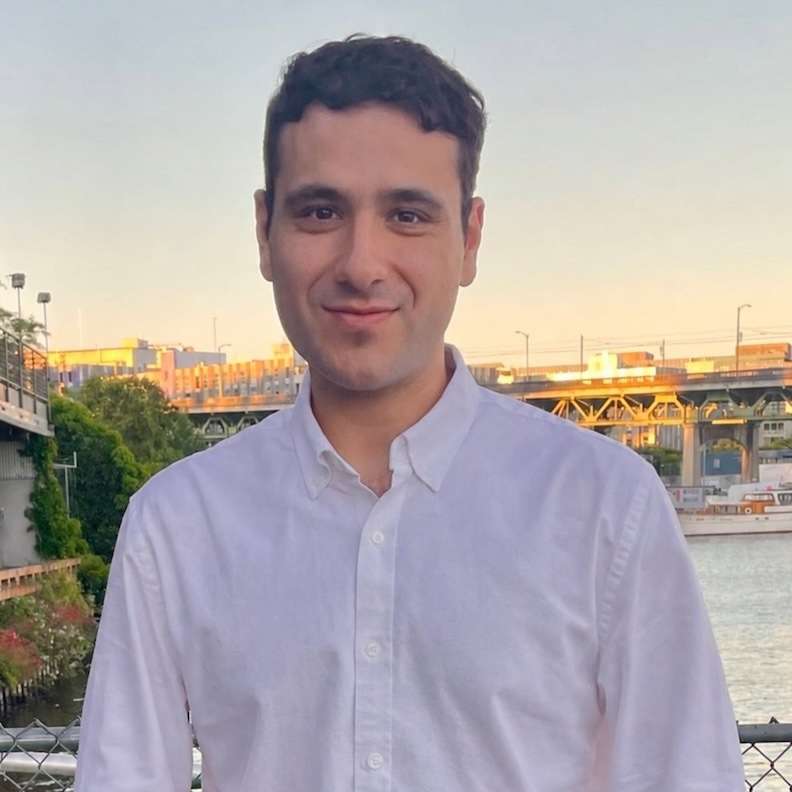


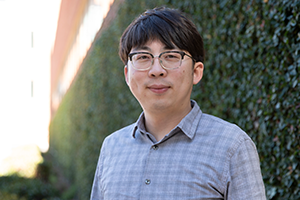
Panelists
Moderated panel: From Domain Data to Trustworthy Agentic Experience.

Simran Arora
Together AI
Incoming Assistant Professor, Caltech
Systems for generating and reusing agent experience

Schedule
Tentative two-day program. Each day includes a 90-minute lunch. Five invited speakers are scheduled each day, and the panel closes Day 2. Talk titles below are thematic descriptions, not confirmed titles. Final dates and times follow AAAI’s allocation. Times are local to Montréal.
| Time | Activity | Speaker |
|---|---|---|
| Day 1 — Data Foundations, Agent Learning, and Evaluation | ||
| 09:00 – 09:15 | Opening remarks: From Domain Data to Agentic Experience | Organizers |
| 09:15 – 09:45 | Invited Talk 1 (Data Foundations) | Jiaqi Ma (UIUC) |
| 09:45 – 10:15 | Invited Talk 2 (Optimization and Learning from Feedback) | Yifan Hu (Rutgers University) |
| 10:15 – 10:45 | Invited Talk 3 (Agent Learning) | Pierre-Luc Bacon (Université de Montréal / Mila) |
| 10:45 – 11:00 | Coffee break | |
| 11:00 – 12:15 | Contributed oral presentations I | Three selected papers |
| 12:15 – 13:45 | Lunch break and informal networking | |
| 13:45 – 14:15 | Invited Talk 4 (Trustworthy Evaluation) | Linyi Li (Simon Fraser University) |
| 14:15 – 14:45 | Invited Talk 5 (Human-Centered AI) | Liwei Jiang (NVIDIA) |
| 14:45 – 16:45 | Poster session I and research discussions | |
| 16:45 – 17:00 | Day 1 wrap-up | Organizers |
| Day 2 — Human Interaction, Physical AI, and Cross-Community Discussion | ||
| 09:00 – 09:15 | Day 2 opening and recap | Organizers |
| 09:15 – 09:45 | Invited Talk 6 (Human–AI Interaction) | Yuwen Lu (Contra Labs) |
| 09:45 – 10:15 | Invited Talk 7 (Generative Media and Creative Workflows) | Brett Halperin (Luma AI) |
| 10:15 – 10:45 | Invited Talk 8 (Physical AI) | Bolei Zhou (UCLA) |
| 10:45 – 11:00 | Coffee break | |
| 11:00 – 12:15 | Contributed oral presentations II | Three selected papers |
| 12:15 – 13:45 | Lunch break and informal networking | |
| 13:45 – 14:15 | Invited Talk 9 (Multiagent Systems and Robotics) | Peter Stone (UT Austin) |
| 14:15 – 14:45 | Invited Talk 10 (Physical and Cyber-Physical Agents) | Jiaqi Ma (UCLA) |
| 14:45 – 16:00 | Poster session II and research discussions | |
| 16:00 – 17:30 | Moderated panel: From Domain Data to Trustworthy Agentic Experience | Simran Arora (Together AI; Caltech), K. J. Kevin Feng (Microsoft Research) |
| 17:30 – 17:45 | Closing remarks and future community directions | Organizers |
The panel will discuss three questions:
- When can operational logs, human interaction records, and simulations become trustworthy learning experience?
- How should provenance, human feedback, and domain-specific verification interact?
- What can be transferred across digital and physical domains without losing essential context?
Organizers
This bridge is organized by








Contact
For questions about the bridge or submissions, please write to the organizers: